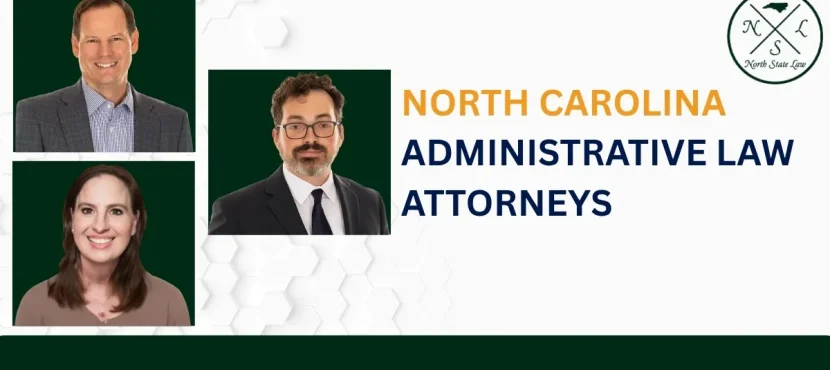
An area of law that goes naturally with professional license defense is administrative law. Administrative law concerns government agencies that are tasked with regulating and overseeing certain organizations and their employees, as well as the Office of Administrative Hearings’ actions. When you’re facing license issues, potential suspensions, or even potential revocations, a North Carolina administrative law attorney can help you with these matters.
State licensing boards are designed to regulate the people practicing under their jurisdiction, and the laws that govern their operations can be complex.
As of the fiscal year 2023-2024, there were 1,427,535 active occupational licenses in the Tar Heel State. With that many professionals practicing within their respective fields, issues are bound to occur.
This is why it’s imperative that you work with a skilled administrative law attorney, like those at North State Law. At North State Law, our attorneys focus specifically on legal issues surrounding professional licenses and administrative law, giving us comprehensive experience and knowledge of the regulations and laws that govern professionals here in North Carolina.
Professionals in other regulated fields may also need legal support with Medical License, Medical Board, Nurse Practitioner License, Nurse License, Pharmacist License, Physical Therapy License, Occupational Therapist License, Nursing Home Admin License, Chiropractic License, and Veterinarian License or Dental License matters.
There are a wide range of regulatory bodies in North Carolina that dictate how different professionals must perform. We assist clients with matters concerning various regulatory bodies, including:
These entities may take a variety of actions against the professionals practicing in their relevant fields. You may receive a letter of concern or a notice of charges or have your license placed under a summary suspension.
Defending against these issues requires taking a case-specific approach involving investigation, document collection and analysis, and witness interviews. We can assist with every aspect of your case. Similar concerns can arise with a CPA License, Real Estate Commission License Defense, Insurance License, Engineer License, Engineers & Land Surveyors License Defense or Legal License.
Allegations that professionals commonly face in North Carolina include:
At North State Law, we have a deep understanding of the relevant administrative laws and how to leverage them to get our clients real results. Every professional board operates differently, with its own rules, regulations, and culture. The primary sources of authority governing professional boards in North Carolina include:
Understanding the various legal frameworks that affect these boards and how they intersect is essential to achieving success in your case.
Our firm focuses on administrative law issues so that we can devote all of our attention to protecting North Carolinians’ professional licenses.
Every licensing board has a slightly different set of processes and procedures for investigating complaints, but they are all similar. These processes generally include:
Having an attorney on your side to help you with each step of this process is crucial. Our team understands what it takes to defend your professional license and has experience working with clients from diverse backgrounds.
If you lose your administrative law case at the level of the Office of Administrative Hearings (OAH), don’t give up hope. You are legally entitled to file an appeal for judicial review. This takes the administrative appeal into the Superior Court, allowing you to have your case heard by an Administrative Law Judge (ALJ). The process for filing an appeal is similar, regardless of what type of professional license you hold. You must:
The board’s decision may not be automatically stayed by filing an appeal. The disciplinary action ordered remains in place while your appeal moves forward unless you request an order that suspends its enforcement. Your attorney can help you with this process.
Even if you completed your initial hearing without the help of a North Carolina administrative lawyer, you should seek legal counsel before filing your appeal. You can call our office to schedule a consultation about General Contractor License, GC License Application Assistance, GC Intermediate/Unlimited License Assistance, Landscape Contractor License, HVAC License Application Assistance, Massage Therapy License Defense or GC Business Formation Service.
Certain workers’ compensation cases also fall under the umbrella of administrative law. For example, a business can face a monetary penalty implemented by the North Carolina Industrial Commission for not carrying adequate workers’ compensation coverage.
Whether you have a small business facing large fines from the Industrial Commission or own an adult care home whose license is at risk, we can help. Our team shares in-depth knowledge of local laws and how they may impact your professional career.
We know how stressful it can be to have your livelihood threatened. If you need to hire an administrative law attorney to assist you with a licensing issue or another regulatory matter, you can turn to North State Law for help. Founded in 2019 by North Carolina Attorney Nicholas Dowgul, our firm’s primary practice area is administrative law. Contact our office to schedule an initial consultation regarding your administrative law case today.


Phone Number(919) 521-8810
© 2026 North State Law • All Rights Reserved. Disclaimer | Site Map | Privacy Policy. Digital Marketing By: 
*Images are obtained under license from Canva and other third-party stock image providers, with attribution included where required.